Table of Contents
ToggleHome theaters don’t require a sprawling entertainment room. Homeowners working with tight spaces often assume they’ll sacrifice comfort or style, but narrow home theater seating opens up possibilities for compact layouts without compromising the viewing experience. Whether you’re converting a spare bedroom, carving out a nook in a basement, or retrofitting a living room corner, the right seating solution makes all the difference. This guide walks through measuring your space, choosing the right furniture, and installing it properly, so you can watch movies like you mean it, even in snug quarters.
Key Takeaways
- Narrow home theater seating solutions eliminate the need for sprawling rooms—measure your space precisely (accounting for actual floor dimensions, not nominal sizes) and position seats between 1.5 to 2.5 times the screen diagonal for optimal viewing.
- Single and double recliners designed for tight spaces offer theater-grade comfort in compact footprints; power recliners ($600–$1,500) add convenience with USB ports and heated seats, while manual versions save $200–$400.
- Installation success depends on measuring furniture before delivery, locating power outlets within 5–8 feet for recliners, leveling uneven floors with shims, and leaving 8–12 inches of clearance behind seating to prevent discomfort.
- Creative layouts like L-shaped sectionals, tiered stadium seating with a 4–6 inch riser, or recessed wall-mounted benches maximize comfort without sacrificing floor space in narrow rooms.
- Quality doesn’t require premium pricing—the sweet spot for durable narrow home theater seating sits around $600–$1,000; below $400 materials deteriorate quickly, while above $1,500 you’re paying for features you won’t use.
- Budget the complete setup (curtains, side tables, acoustic panels) alongside seating, start with one excellent chair rather than two mediocre ones, and consider reclaimed cinema seats for indestructible construction at fraction of retail cost.
Understanding Space Constraints and Layout Options
Narrow home theater seating isn’t just about finding chairs that fit, it’s about understanding how your room’s dimensions shape what works. Most home theater spaces operate within standard constraints: hallways between 24 and 36 inches wide, bedrooms under 12 feet across, or finished basement corners with irregular walls. The key is measuring twice and visualizing the complete setup before you buy anything.
Room depth matters as much as width. A good viewing distance sits between 1.5 and 2.5 times the screen diagonal. If your screen is 55 inches and your seating is only 6 feet away, you’ll strain your neck. If it’s 15 feet back, you’ll sit too far. Narrow layouts often force tighter viewing angles, seats at 45 to 60 degrees off-center are common, so recliners with swivel bases become practical rather than optional.
Measuring and Planning Your Theater Room
Start with a tape measure and graph paper, or use a basic room-planning app on your phone. Write down the actual usable floor space, noting obstacles: doorways, HVAC vents, existing windows, and load-bearing posts. Nominal dimensions (the listed size of your space) often differ from actual floor-to-floor measurements. A “12-foot” room is often 11 feet 8 inches once you account for drywall.
Next, map your seating. Standard recliner seats are 32–36 inches wide: loveseats run 50–60 inches. If your room is 9 feet wide, a single recliner plus a console table leaves about 3 feet on one side for walkways, workable, but tight. Sketch the angle from your seating to the screen: a straight-on view is ideal, but 25–30 degrees off-center is acceptable. Mark the screen wall first, then position seats working backward.
Consider traffic flow. You’ll need at least 18 inches of clearance in front of recliners when fully extended, and enough space to walk to your seat without turning sideways. If your room is under 10 feet deep, you’re likely limited to a single row. Two rows demand at least 12–13 feet.
Top Narrow Seating Styles for Home Theaters
Narrow spaces call for seating that doesn’t waste an inch. Modern theater furniture has evolved beyond heavy, space-hogging sectionals. You now have options that fit tight floor plans while delivering comfort.
Single and Double Recliners for Limited Spaces
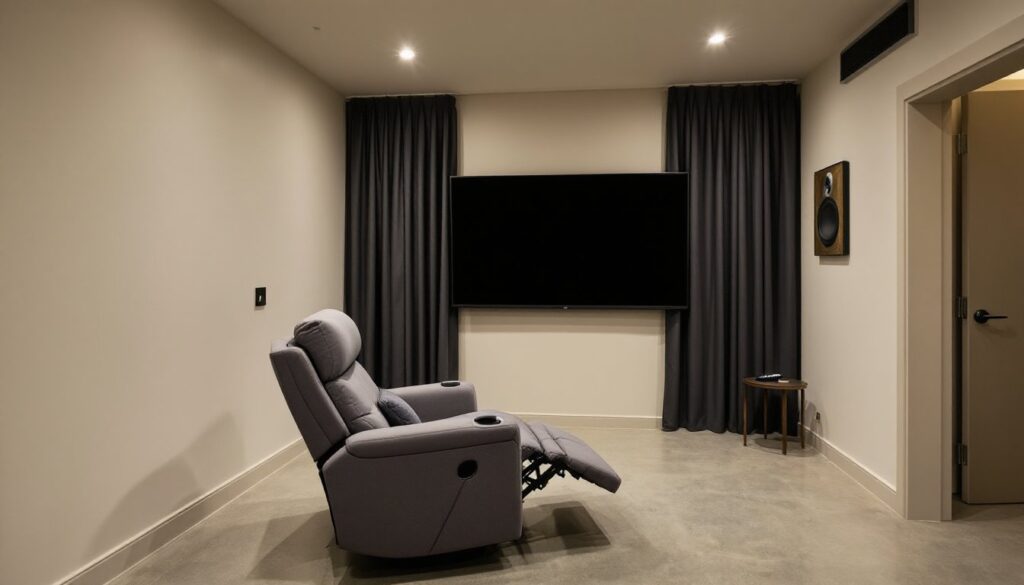
Single recliners remain the workhorse of narrow home theater seating. A quality 39-inch-wide power recliner with a mechanical or electrical footrest delivers theater-grade comfort in a footprint smaller than a desk chair. Look for models with memory foam padding, lumbar support adjustment, and cup holders, features once found only in expensive cinema-grade seating.
Double (love seat) recliners come in two flavors: side-by-side seats with a shared armrest (48–54 inches wide), or two independent recliners joined at the base (often called “theater recliners” or “home theater loveseats,” running 60–72 inches). For truly narrow spaces, the first type saves width. Both let couples or kids sit close without needing separate chairs.
Power recliners cost more upfront ($600–$1,500 for quality brands) than manual versions ($300–$800), but they’re more convenient and often include built-in USB charging ports and heated seats, nice-to-haves that push folks to use the space more. Many modern power models are surprisingly quiet: older hydraulic systems rumbled. If power fails, quality recliners include manual overrides or a battery backup so you’re not stuck mid-recline.
When evaluating recliners, test the footrest. Some models have slow-close mechanisms to prevent loud slams: others drop fast. Ask about the headrest, fixed or adjustable? Does it fold down when you stand? Spend time sitting. A recliner might look compact but have a back support that’s too stiff or padding that goes flat after a year.
Multi-Functional Seating That Maximizes Comfort
Narrow spaces reward creative thinking. Theater-style sectionals with chaise extensions can wrap an L-shaped room without eating floor space, since the chaise typically ends where a side wall begins. Some models include a storage ottoman at one end, store blankets, remotes, and gaming controllers inside.
Recessed or wall-mounted seating (sometimes called “nook seating”) is less common but brilliant for truly constrained layouts. Built-in cushioned benches with backrests are bolted directly to walls, effectively stealing height instead of depth. They’re custom builds, so cost is higher ($2,000–$5,000+ installed), but they’re ideal if you’re remodeling and can plan the footprint from the start.
For rooms that pull dual duty as a media space and guest room, sofa-bed theater chairs exist, though they’re a compromise: they recline for viewing but fold flat for sleeping. They’re narrower than true recliners (often 32–36 inches) and less supportive for long sitting sessions. Use them if you have no other option.
Tiered or stadium seating works well in longer narrow rooms. Position one recliner 6 feet from the screen, a second row 10 feet back and 8–12 inches higher. Many DIYers build a low platform (4–6 inches, code-compliant riser height) for the back row using blocking and plywood. This staggered setup costs less than two separate seating zones and lets everyone see the screen without necks craning.
Installation Tips for Perfect Theater Seating Placement
Placement is where theory meets reality. Measure your furniture before delivery, not after the truck leaves. Many retailers won’t take back a 500-pound recliner because it doesn’t fit through a basement door. Confirm doorway width, stairwell dimensions, and any tight corners.
For power recliners, locate nearby electrical outlets. Power cords typically run 5–8 feet, so position seating within that distance. If your ideal spot is far from outlets, a heavy-duty extension cord rated for continuous use (14 AWG minimum) works, but runs must be secured to walls or baseboards, don’t let cords cross walkways. This is a safety issue, not a style preference. Trip hazards in dark theaters are real dangers.
Leveling matters. Uneven concrete basement floors cause recliners to lean or wobble. Use furniture shims (plastic wedges) or furniture feet with adjustable legs to level each piece. Tilt each recliner, front-to-back and side-to-side, using a small level. A tilted seat wears unevenly and becomes uncomfortable.
Space behind seating: if your recliner’s back ends within 6 inches of a wall, you’ve lost knee room when leaning back. Leave at least 8 inches (ideally 12) from the recliner’s back to walls or storage. If your room is too tight, consider a manual recliner with a shallower recline (some decline only 40 degrees instead of 65), or a cinema-style fixed seat with a fold-down footrest.
Wall-mounted shelving above or beside seating should be braced properly and kept clear of heads. A 55-inch or larger screen mounted above viewing seats demands specific wall studs (16 inches on-center spacing). If you’re mounting a TV, use a full-motion mount rated for your TV’s weight, and ensure the electrical outlet is code-compliant, recessed in-wall boxes are safer than surface-mounted cords.
For multi-row setups, the best home theater seating of 2024 often features modular designs that adapt to tiered rooms. Confirm riser heights don’t exceed 7 inches between rows (trip hazard codes vary by jurisdiction, but 7 inches is standard for public theaters, home codes are more lenient but safer practices apply). Edge the riser with LED strip lighting recessed into the tread for safe navigation during movies.
Budget-Friendly Options Without Compromising Quality
Narrow home theater seating doesn’t demand a premium price. The sweet spot for quality recliners sits around $600–$1,000. Below $400, you’re often paying for appearance over durability, cheap foam hardens in 2–3 years, leather cracks, and mechanical recline systems seize. Above $1,500, you’re usually paying for brand prestige or cinema-grade features you won’t use at home.
Where to save: manual recliners cut $200–$400 off power models if you don’t mind hand-cranking the footrest. Microsuede or polyester fabric costs less than genuine leather but cleans well and ages better (leather can dry-crack or stain). Some mid-range brands offer motorized recline but manual footrests, a hybrid that drops the price 20–30%.
Other money moves: buy a single quality recliner first, add a second later. Best home theater seating 2024 reviews confirm that one excellent chair beats two mediocre ones. Order direct from manufacturers when possible: showroom markups run 30–50%. Ask about floor models or open-box returns, stores often sell these at 15–25% discounts, and they come with full warranties.
Consider a used theater seat from a bankrupt cinema or renovation. Reclaimed theater seating is plentiful online, often costs $200–$400 per seat, and is built indestructibly. The trade-off: they’re heavier, take up slightly more space, and were designed for public use (you may want to reupholster). A local upholsterer charges $150–$400 per seat to refresh fabric.
Budget the full setup, not just the seat. Throw pillows ($40–$80), a small side table ($60–$150), blackout curtains ($50–$200), and acoustic panels or bass traps ($100–$300) add up. Start with seating, then upgrade decor and acoustics over time. Modern design sites like Dwell showcase stylish theater spaces built incrementally, proof that Rome wasn’t built in a day, and neither was your perfect theater.
Final reality check: a narrow theater room is a constraint, not a flaw. Some of the coziest home theaters are intimate, single-row setups with a great chair, a killer screen, and solid speakers. You don’t need a 20-by-16-foot palace to enjoy movies. Use your space smartly, invest in comfort, and skip the trends.