Table of Contents
ToggleLeesburg’s historic charm and growing real estate values make home remodeling a smart investment for local homeowners. Whether you’re updating a century-old Federal-style home or refreshing a mid-century colonial, the right renovation can boost both livability and resale value. But tackling a remodel in Leesburg isn’t just about picking paint colors, you’ll navigate local building codes, permit requirements, and the competitive contractor landscape unique to this Northern Virginia market. This guide walks you through the essentials: what projects make sense for Leesburg homes, how to find and vet contractors, budget realistically, and keep your timeline on track. Ready to turn that renovation dream into reality?
Key Takeaways
- Home remodeling in Leesburg, VA is a smart investment that builds equity, with kitchen and bathroom renovations recovering 60–70% of costs at resale in this competitive Northern Virginia market.
- Kitchen and bathroom projects are the highest-ROI remodels in Leesburg; expect $50,000–$75,000 for kitchens and $15,000–$30,000 for bathrooms, plus hidden costs like plumbing relocation.
- Finding the right contractor requires checking references from local Leesburg projects, verifying Virginia Class A licensing for projects over $5,000, and confirming $1M liability insurance and performance bonds.
- Budget a 15–25% contingency reserve for surprises common in Leesburg’s older homes, and follow a standard payment schedule of 10% down, periodic draws at milestones, and final payment only after inspection.
- Permits are non-negotiable in Leesburg: plan for 2–4 week delays, confirm Historic District Architectural Review Board approval if applicable, and ensure all electrical, plumbing, structural, and HVAC work is permitted to protect insurance coverage and future resale value.
- Outdoor living spaces like decks ($4,000–$8,000) and patios ($2,500–$5,000) are popular Leesburg remodeling projects that maximize appeal on the area’s spacious 0.25–0.5 acre lots.
Why Leesburg Homeowners Are Investing in Remodeling Projects
Home remodeling in Leesburg isn’t just a trend, it’s a calculated move. Property values in Leesburg continue to climb, making renovations one of the most effective ways to build equity. A well-executed kitchen or bathroom remodel recovers roughly 60% of its cost at resale, and in a competitive market like Leesburg, that payback matters.
Beyond the numbers, Leesburg’s neighborhoods, from downtown historic districts to suburban enclaves, are increasingly attracting younger families and professionals. These homeowners expect updated systems, modern layouts, and energy-efficient upgrades. Many Leesburg homes date back decades, meaning aging mechanicals, outdated electrical panels, and inefficient HVAC systems are common pain points. A remodel addresses these issues while modernizing the home to meet today’s standards.
The Leesburg location itself adds urgency. Proximity to Washington D.C., growing tech employment corridors, and the boom along Route 7 mean housing competition is fierce. Homes that sit on the market longer than 20 days are already underperforming. Strategic renovations reduce days-on-market and attract serious buyers. Plus, homeowners living in Leesburg often stay longer than the national average, meaning they want their homes to feel current and comfortable, not just saleable.
Popular Home Remodeling Projects in Leesburg
Kitchen and Bathroom Renovations
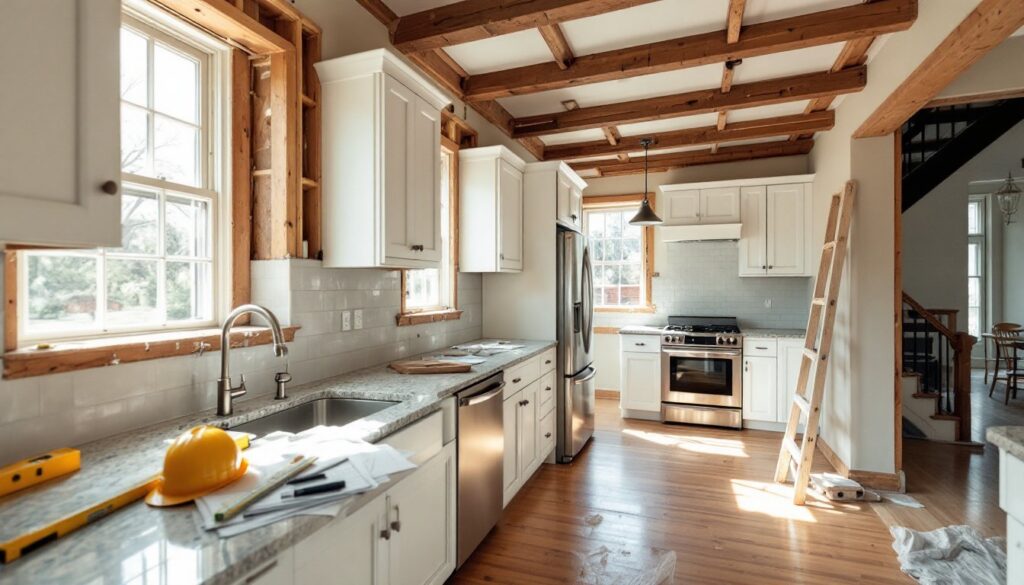
Kitchens and bathrooms command the highest ROI in Leesburg remodels. A mid-range kitchen renovation (new cabinets, countertops, appliances, and flooring) typically runs $50,000–$75,000 and recoups about 60% of cost. Bathrooms see even better returns, a $15,000–$30,000 refresh (new vanity, tile, lighting, and fixtures) often nets 65%–70% recovery.
What resonates in Leesburg kitchens? Open layouts that connect to dining and living spaces. Granite or quartz countertops over laminate. Stainless steel appliances. And crucially, adequate storage, many older Leesburg homes lack pantries or deep cabinetry. Bathroom trends lean toward spa-like touches: rainfall showerheads, heated towel racks, and larger vanities. Walk-in showers replace tub-shower combos in primary baths, while powder rooms often get bold wallpaper or tile accents.
Budget wisely: a granite countertop with edge treatment runs $40–$80 per linear foot installed. Subway tile in a full bathroom (walls and floors) costs $1,500–$3,000 depending on layout and grout lines. The biggest hidden cost? Plumbing relocation. Moving a toilet, sink, or shower vent requires rerouting supply lines and drain stacks, work that balloons labor bills fast.
Outdoor Living Spaces and Additions
Leesburg’s warm summers and mild shoulder seasons make outdoor living highly desirable. Deck and patio additions are among the most popular remodels here. A new pressure-treated lumber deck (12×16 feet) runs $4,000–$8,000: composite decking costs 50% more but needs zero staining and lasts 25+ years with minimal maintenance.
Patios are equally popular. A stamped concrete patio (500 square feet) costs $2,500–$5,000 and offers endless design options mimicking slate, brick, or stone. Many Leesburg homes sit on 0.25 to 0.5 acre lots, plenty of room for expansions that add genuine square footage and appeal.
Outdoor kitchens, while pricier ($5,000–$15,000), are gaining traction among empty-nesters and families who entertain. A built-in grill, mini fridge, and counter space turn a backyard into a living extension. Hardscaping (retaining walls, pathways, drainage) often accompanies these projects and prevents future foundation or grading problems, critical in Leesburg’s clay-heavy soil.
Finding the Right Contractor for Your Leesburg Remodel
Leesburg’s contractor market is robust but fragmented. You’ll find everything from solo carpenters to multi-crew firms. The wrong pick turns a renovation into a nightmare: the right one keeps you on budget and schedule.
Start by asking neighbors and local real estate agents, they know who delivered. Then cross-check on Angi and HomeAdvisor, which collect verified reviews and pricing data. Look for contractors with at least 5 years local experience and proper licensing. Virginia requires a Class A contractor license for projects over $5,000: verify this with the Virginia Department of Professional Regulation (DPOR). Never hire cash-only or unlicensed workers, you lose all recourse if the job fails.
Interview at least three contractors. Ask for references from Leesburg projects specifically (not jobs 50 miles away). Request a detailed written estimate breaking down labor, materials, permits, and overhead. Watch out: contractors quoting significantly below market rates often cut corners, skip permits, or underbid and demand change orders mid-project.
Once you’ve narrowed it down, verify bonding and liability insurance. A $1M general liability policy and performance bond protect you if the contractor abandons the job or damages your home. Ask your insurance agent about builder’s risk coverage for the duration of the project, your homeowner’s policy likely won’t cover work-in-progress.
The contract itself matters enormously. It should specify start and end dates, payment schedule (never pay 100% upfront), material specifications, cleanup responsibility, and dispute resolution. A retainage clause, holding back 5-10% until final inspection, keeps the contractor motivated to finish properly.
Planning Your Budget and Timeline
Budgeting a Leesburg remodel requires three numbers: the base estimate, a contingency buffer, and your true maximum spend.
Base estimate comes from contractor quotes. Add a 15-25% contingency reserve for surprises, hidden rot, asbestos drywall tape in 1970s homes, electrical code violations discovered during demolition. Leesburg’s older housing stock makes contingencies especially crucial. Then set a hard ceiling beyond which you’ll pause rather than proceed. Blowing budget mid-project destroys your financial plan and relationship with the contractor.
Timelines compress and stretch. A kitchen remodel typically takes 6-8 weeks from demolition to final inspection. A bathroom renovation runs 3-5 weeks. Weather, permit delays, and material lead times cause overruns. Get a critical-path schedule from your contractor, which tasks are sequential (can’t install cabinets until walls are framed) and which can run parallel (plumbing and electrical rough-in happen simultaneously).
Leesburg permit delays average 2-4 weeks, though complex projects or those requiring historical review can add 6-8 weeks. Budget for this. Also ask: does your contractor pull permits, or do you? Most professionals handle it, but verify who’s responsible for fees (typically $500–$2,000 depending on scope).
Payment schedule matters. The standard is 10% down upon contract signing, periodic draws as milestones are met (framing complete, rough-in done, final walkthrough), and final payment at completion. Never pay the full balance until you’ve inspected work and any punch-list items are corrected. A typical draw schedule looks like: 10% down, 30% after framing, 30% after rough utilities, 20% after drywall/finish work, 10% on final inspection.
Navigating Leesburg Building Codes and Permits
Here’s where DIY dreams often stall: permits. Leesburg, like most Northern Virginia jurisdictions, requires permits for structural work, electrical, plumbing, HVAC, and egress windows. Deck and patio projects under certain thresholds may be exempt, but always check with the Loudoun County Department of Building and Development Services before assuming you’re good.
Common permit categories:
- Electrical: Any new circuits, panel upgrades, or service changes. A simple bathroom outlet costs $50-$100 to permit: a full panel upgrade runs $300+.
- Plumbing: New drains, supply lines, or fixture relocations require permits. Rough-in inspection happens before walls close: final inspection after fixtures connect.
- Structural/Building: Removing a load-bearing wall, adding an addition, or significant framing changes demand engineering. A structural engineer’s report costs $500–$2,000 but is non-negotiable for safety and code compliance.
- HVAC: New ductwork, furnace, or AC replacement requires permitting and inspection.
Leesburg also has Historic District overlay rules. If your home sits in a historic district (downtown Leesburg and surrounding areas), exterior changes, roofing, and visible modifications require Architectural Review Board approval before construction. This adds 4-8 weeks to timelines. Your contractor should know this, but confirm.
Inspection sequence: framing rough-in → electrical rough-in → plumbing rough-in → insulation → drywall → final inspection. Missing an inspection can force you to tear into walls to verify work meets code, an expensive and frustrating setback.
Why permits matter beyond bureaucracy: they tie to your property record, which insurance companies and future buyers see. Unpermitted work can void insurance claims, trigger liens, or make a home unmortgageable. It’s not worth the risk.