Table of Contents
TogglePlanning a kitchen or bath remodel isn’t just about picking out tile colors and faucets, it’s about finding the right contractor, setting a realistic budget, and knowing what to expect along the way. Whether you’re refreshing a dated bathroom or overhauling your kitchen for better function and style, the decisions you make at the start shape the entire project. This guide walks you through finding qualified contractors near you, understanding 2026 design trends, and managing the renovation process from start to finish.
Key Takeaways
- Kitchen and bath remodel projects near you benefit from stabilized supply chains and improved contractor availability in 2026, making now an ideal time to start your renovation.
- Verify local contractors through personal referrals, online review platforms like Angie’s List and HomeAdvisor, and credential checks including business licenses, insurance, bonding, and Better Business Bureau ratings.
- Budget strategically by allocating 15–20% contingency reserves for unexpected issues, prioritizing visible elements like cabinetry and countertops that drive daily satisfaction over structural work.
- Kitchen remodels average $50,000–$80,000 while bathroom projects range from $5,000–$12,000 for modest updates to $30,000+ for full renovations, depending on scope and location.
- Expect kitchen and bath renovations to take 6–12 weeks and 4–8 weeks respectively, with phases progressing from demolition through rough-in work to finish installation, requiring advance planning for space disruptions.
- Choose durable materials like premium cabinetry, solid-surface countertops, and sustainable options over fleeting trends, and always get your scope of work, timeline, and payment schedule in writing before construction begins.
Why Now Is The Perfect Time To Remodel Your Kitchen And Bath
The kitchen and bath remodel market is entering a sweet spot in 2026. Material supply chains have stabilized after years of disruption, meaning contractors can source fixtures, countertops, and cabinetry more reliably and at more predictable pricing. Labor availability is improving, which means shorter wait times and more competitive bids from local contractors.
Beyond logistics, the ROI on kitchen and bath upgrades remains strong. A mid-range kitchen remodel recovers roughly 60% of its cost at resale, while bathrooms often see 50-65% return. If you’re planning to stay in your home for five or more years, the investment pays dividends in daily quality of life: better storage, modern plumbing and electrical systems, and improved energy efficiency. Spring and early summer are peak remodeling seasons, so starting the search now gives you the best selection of contractors and scheduling flexibility.
How To Find Qualified Kitchen And Bath Contractors Near You
Start by asking for recommendations from friends, family, and neighbors who’ve completed remodels recently. Personal referrals carry weight because you can see finished work and hear honest feedback about the contractor’s communication, timeline adherence, and cleanup practices.
Next, use online platforms. Sites like Angie’s List offer local kitchen and bathroom remodelers with verified customer reviews and background checks. HomeAdvisor provides contractor matching and cost estimation tools to help you understand typical project budgets in your region. Both allow you to compare quotes and read detailed reviews from past clients.
Verify credentials before scheduling consultations. Look for a current business license, liability insurance, and workers’ compensation coverage. Ask whether the contractor is bonded, this protects you if the job isn’t completed. Check the Better Business Bureau for complaint history, though isolated complaints aren’t disqualifying: how a contractor responds to issues matters more.
Always request multiple bids, ideally three to five, from licensed contractors. This gives you pricing context and lets you compare approaches. Beware of bids that are significantly lower than the rest: they often signal corner-cutting or underestimating scope.
Questions To Ask Before Hiring A Local Remodeling Company
During consultations, ask these questions to separate serious contractors from unreliable ones:
- Who is your project manager, and will they be the primary contact throughout the job? You want continuity and clear communication.
- Can you provide three recent client references from kitchen or bath projects of similar size? Call these references and ask about quality, timeliness, and how change orders were handled.
- What’s your timeline for this project, and what could delay it? Honest contractors acknowledge weather, material delays, and permit timelines.
- How do you handle change orders and unexpected issues? Get this in writing. Will you request approval before proceeding with additional costs?
- What’s included in cleanup, and how often do you remove debris? Daily cleanup keeps the site safe and organized.
- Are you pulling permits for this work? For structural changes, plumbing, electrical, and certain renovations, permits are required by code. Any contractor who says permits aren’t necessary is cutting corners.
- What warranty or guarantee do you offer on labor? Reputable contractors typically guarantee workmanship for one year.
Once you’ve selected a contractor, get everything in writing: scope of work, timeline, payment schedule, warranty details, and an estimate for any change orders. This protects both of you.
Setting A Realistic Budget For Your Kitchen And Bath Project
Kitchen and bath remodels vary wildly in cost depending on scope, materials, and your location. A small bathroom refresh (new fixtures, paint, simple tile) might run $5,000–$12,000, while a full renovation with relocating plumbing can exceed $30,000. Kitchens are typically larger: a modest remodel (new cabinets, countertops, appliances, and finishes) averages $50,000–$80,000, though high-end projects easily surpass $150,000.
Use cost estimators on HomeAdvisor and ImproveNet to baseline your region’s pricing. These tools account for local labor costs and material availability, which vary significantly from one area to another.
Allocate your budget strategically. Prioritize what you’ll notice daily, cabinetry, countertops, plumbing fixtures, and lighting. These visible elements drive satisfaction more than structural elements homeowners never see. Leave 15–20% as a contingency reserve for unexpected issues: hidden water damage, outdated wiring, structural surprises. Most remodels uncover at least one surprise once walls come open.
Choose materials with longevity in mind. Premium cabinetry lasts 20+ years: cheap particleboard fails in five. Solid-surface countertops (quartz, granite) outlast laminate by decades. Discuss material options and durability with your contractor so you understand the long-term value, not just the upfront cost.
Popular Kitchen And Bath Design Trends For 2026
In 2026, kitchen and bath design is favoring functionality and timeless aesthetics over fleeting trends. Warm neutrals, soft whites, beiges, warm grays, and muted earth tones, dominate color palettes. These serve as a backdrop for accent colors introduced through hardware, textiles, and accessories that are easier to change if tastes evolve.
Open shelving in kitchens remains popular but balanced with closed storage to avoid clutter. Glass-front cabinetry lets you display attractive dishware while keeping less photogenic items hidden.
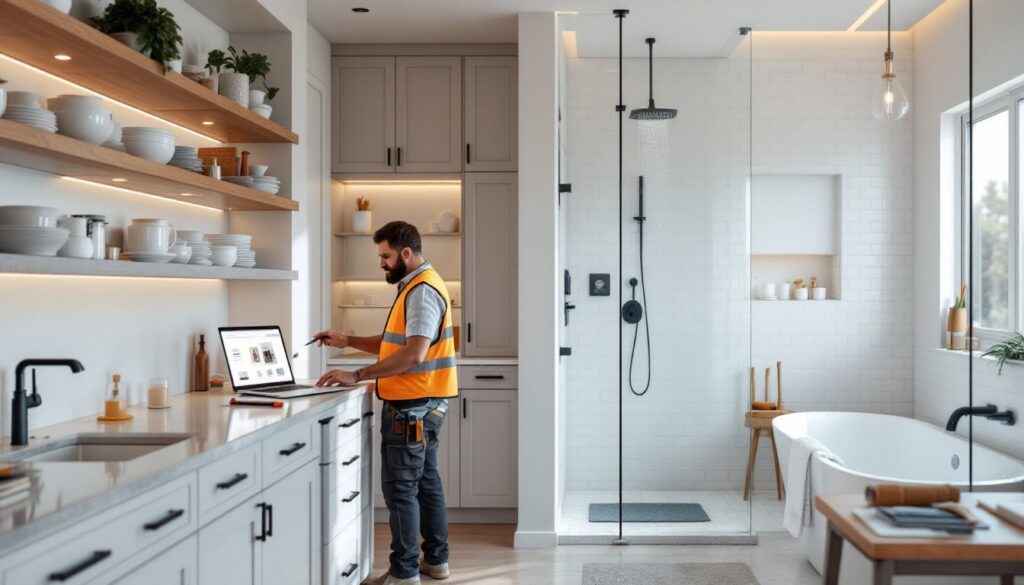
In bathrooms, spa-like features continue gaining momentum: heated floors, rainfall showerheads, built-in niches in shower walls, and freestanding soaking tubs separate from the shower. These elements transform daily routines into moments of calm.
Sustainable materials are moving from niche to mainstream. Recycled glass countertops, FSC-certified wood cabinetry, and low-VOC (volatile organic compound) paints improve indoor air quality while reducing environmental impact. These options also retain resale appeal.
Hardware finishes are trending toward matte black, brushed brass, and warm bronze rather than polished chrome. These finishes hide fingerprints better and pair with more design styles.
Remember: trends pass, but quality execution and materials last. Choose what you genuinely love and will live with happily for a decade, not what Instagram suggests.
What To Expect During Your Kitchen And Bath Renovation
Renovations are messy, loud, and disruptive, plan accordingly. A bathroom remodel typically takes 4–8 weeks: a kitchen remodel averages 6–12 weeks depending on complexity. During this time, you may lose use of the space entirely or work around active construction.
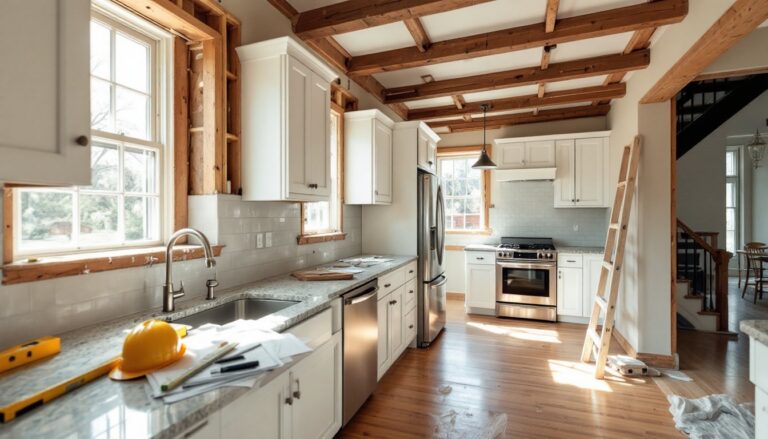
The first week focuses on demolition and prep work. Contractors remove existing cabinetry, fixtures, and finishes, exposing the underlying structure. This is when surprises often emerge: asbestos-containing materials (common in older homes), water damage, or outdated framing. Don’t panic: address issues immediately rather than hoping they’ll resolve themselves.
Once prep is complete, rough-in work begins: plumbing lines, electrical wiring, and structural changes. This is when building permits are most commonly inspected. Inspections ensure work meets local code and protects you legally. Don’t skip or rush inspections.
Finish work comes last: drywall, painting, flooring installation, cabinetry, fixtures, and final details. This phase feels slower but is actually where the space transforms from a construction zone into a functional room.
Throughout the project, expect dust everywhere, even with containment barriers, and plan for water shutdowns and temporary electrical arrangements. If you’re remodeling your only kitchen or bathroom, arrange alternative cooking and showering space with a neighbor or hotel stays for critical days.
Stay in communication with your contractor. Weekly check-ins prevent miscommunication and let you address concerns early. Keep photos of work in progress: they’re useful for warranty claims or insurance if issues arise after the project concludes.
Conclusion
A kitchen or bath remodel is a substantial investment, but armed with the right contractor, a realistic budget, and clear expectations, it transforms daily living. Start by vetting local contractors thoroughly, ask hard questions, and get everything in writing. Set your budget with contingency room, choose materials for longevity over trends, and prepare for the disruption ahead. The result, a functional, beautiful space tailored to how you actually live, is worth the temporary chaos.