Table of Contents
ToggleIf you’ve spotted ants marching across your porch, spiders in the corners, or roaches scurrying under the kitchen sink, you’ve probably wondered about Ortho Home Defense. It’s one of the most popular over-the-counter pest control products on shelves, but before you buy a bottle, the real question is: is it safe for your home and family? This guide cuts through the marketing and walks you through what Ortho Home Defense actually is, how it works, what the science says about safety, and when you might want to consider alternatives. We’ll keep it practical, no scare tactics, just honest information to help you make the right call for your home.
Key Takeaways
- Ortho Home Defense is EPA-approved and safe when used as directed, containing bifenthrin (a synthetic pyrethroid) at 0.22% concentration with minimal residual risk to humans at labeled use rates.
- Certain groups—including pregnant women, young children, people with asthma or respiratory conditions, and those with neurological sensitivities—should consult a healthcare provider before using Ortho Home Defense.
- Proper application of Ortho Home Defense requires protective equipment, calm weather conditions, keeping people and pets away until surfaces dry completely, and storing the bottle safely in its original container.
- Prevention methods like caulking cracks, sealing gaps, and removing entry points are more effective long-term solutions than spray applications alone.
- Non-chemical alternatives such as food-grade diatomaceous earth, sticky traps, and boric acid powder offer lower-toxicity options for homeowners concerned about chemical exposure.
- For severe infestations, hiring a licensed pest control professional ensures safe and effective treatment tailored to your specific situation and local regulations.
What Is Ortho Home Defense and How Does It Work
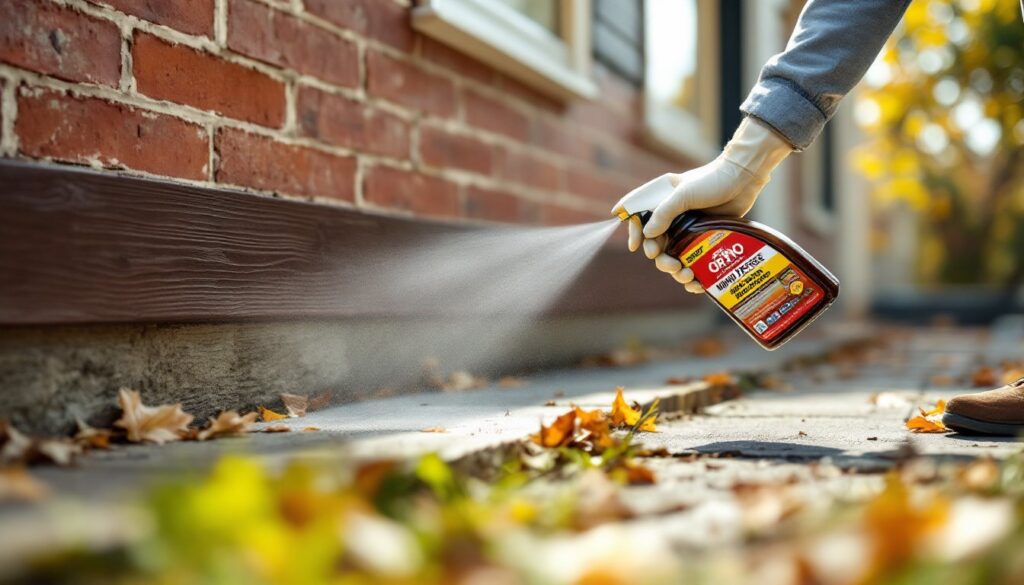
Ortho Home Defense comes in a few formulations, but the most common is the spray bottle version you’ll find in most hardware stores and online retailers. The product is designed to kill a broad range of household pests, ants, roaches, spiders, earwigs, crickets, silverfish, and centipedes. It’s applied as a perimeter spray around your home’s exterior foundation, baseboards, windows, and doors to create a barrier that prevents pests from entering.
The way it works is straightforward: you spray it on surfaces where pests travel, and when they contact the treated area, the active ingredients interfere with their nervous system, causing paralysis and death. The spray dries to form a protective layer that can last for several weeks depending on weather and application. Most homeowners appreciate it because it doesn’t require mixing (unlike concentrate formulations), and you can target problem areas precisely. You’re essentially creating a chemical moat around your home’s entry points.
Safety Profile and Active Ingredients
EPA Approval and Testing Standards
Ortho Home Defense contains bifenthrin as its primary active ingredient, typically at a concentration of 0.22%. Bifenthrin is a synthetic pyrethroid, a class of insecticides based on compounds found naturally in chrysanthemum flowers. Before any pesticide hits the market, the EPA (Environmental Protection Agency) requires extensive testing for toxicity, environmental impact, and safe handling. Bifenthrin has been approved by the EPA for residential use since the 1980s and continues to be re-evaluated. The label on any Ortho Home Defense product reflects the EPA’s determination that it’s safe when used as directed.
The key phrase is “as directed.” EPA approval assumes you follow the label instructions: wearing gloves, avoiding breathing vapors, keeping it away from children and pets during application, and allowing treated surfaces to dry before anyone comes into contact with them. Studies show that bifenthrin breaks down relatively quickly in the environment and has low toxicity to mammals at labeled use rates. But, it does have higher toxicity to aquatic organisms, so you shouldn’t spray it near ponds, streams, or storm drains.
When applied correctly, the residual risk to humans is considered minimal by regulatory standards. Most poisoning incidents linked to pyrethroid insecticides result from ingestion or severe misuse, not from household spray applications following the label.
Potential Health Risks and Who Should Avoid It
Even though EPA approval, no pesticide is completely risk-free. Bifenthrin can cause minor skin irritation or allergic reactions in sensitive individuals. If you inhale the spray, you might experience respiratory irritation, headache, or dizziness. These symptoms typically resolve quickly once exposure ends and fresh air is available.
Certain groups should exercise extra caution or avoid bifenthrin products altogether. Pregnant women and young children have heightened sensitivities to chemical exposures, and some studies suggest pyrethroid exposure during pregnancy warrants discussion with a doctor before application. People with asthma, severe allergies, or respiratory conditions should consult a healthcare provider before using any spray pesticide. Pets with respiratory sensitivities can also be affected, particularly birds and aquatic pets, which are more vulnerable to pyrethroid toxicity than dogs or cats.
If someone in your household has experienced seizures or neurological issues, bifenthrin exposure is a potential concern, some research links pyrethroid exposure to neurological effects in sensitive individuals, though the connection remains debated. In these cases, talking to a doctor before use makes sense. The bottom line: Ortho Home Defense is regulated as safe for general household use, but it’s not universally safe for every person, pet, or circumstance.
Best Practices for Safe Application
If you decide to use Ortho Home Defense, treating it like any other chemical product in your home is essential. Start by reading the label completely, not skimming it, actually reading it. The label tells you exactly where and how to apply it, what weather conditions work best, and what safety precautions you need.
Here’s a practical application checklist:
- Wear protective equipment: Gloves (nitrile or latex), long sleeves, and pants. Safety glasses are optional but smart, especially if you’re spraying overhead. A dust mask isn’t necessary for liquid sprays, but if you’re sensitive, wear one anyway.
- Choose the right conditions: Spray on calm days, wind will blow the product away and expose you to more vapor. Avoid rain for at least 24 hours after application so the product dries and bonds to surfaces.
- Keep people and pets away: Apply it when kids and pets are somewhere else, and don’t let them return to treated areas until everything is completely dry (usually 1–2 hours for external applications).
- Ventilate: Open windows and doors during application and for 30 minutes after.
- Apply only as directed: The label specifies square footage coverage and how much to spray. More is not better, it’s wasteful and increases exposure risk.
- Store safely: Keep the bottle in its original container, out of reach of children and pets, in a cool, dry place. Never pour it into another container or store it near food.
If you’re treating the interior of your home (baseboards, window sills), follow the same precautions and consider leaving the house for a few hours if you have respiratory concerns. Most professional pest control companies won’t even spray interiors unless the home is vacant or everyone will be gone for several hours.
Safer Alternative Pest Control Methods
If Ortho Home Defense feels like overkill, or if someone in your home is sensitive to chemicals, several lower-toxicity alternatives exist. Recent reviews of ant control products show that Ortho Home Defense is effective, but it’s not the only option.
Caulking and sealing cracks around windows, doors, and foundation gaps is the absolute first step and costs almost nothing. Pests need an entry point, and blocking them is far more effective long-term than spraying. Use paintable caulk or foam sealant (available at any hardware store) to close gaps larger than 1/4 inch.
Non-chemical barriers work surprisingly well: diatomaceous earth (food-grade, not pool-grade) can be dusted along baseboards and exterior perimeters. It’s non-toxic to humans and pets but shreds the exoskeletons of insects that cross it. The catch is that it loses effectiveness when wet, so it works better indoors or under covered areas.
For specific pest types, targeted solutions often beat broad sprays. Boric acid powder works for roaches and ants, though it requires careful placement away from children and pets. Sticky traps catch spiders and crawling insects without chemicals. Resources like The Spruce and Today’s Homeowner offer comprehensive guides on pest-specific, lower-toxicity approaches.
If you’re dealing with a severe infestation, a licensed pest control professional will choose products and application methods that match the severity. They’re trained to handle stronger materials safely and know local regulations you might not.
Conclusion
Ortho Home Defense is EPA-approved and safe when used exactly as directed, making it a reasonable choice for most homeowners dealing with common household pests. It’s not a magic bullet, and it shouldn’t be your first step, sealing entry points and removing attractants (food debris, moisture, clutter) always come first. If you’re concerned about chemical exposure, sensitive health conditions, or have young children or pets, start with non-chemical barriers and consider calling a professional pest control service. The safest approach is the one you’re comfortable implementing consistently.