Table of Contents
ToggleIf you’ve ever walked into a truly professional home theater, you know the difference between a TV on a wall and a real entertainment space. Gary DelaBonte, a legendary home theater designer, has built a reputation for creating systems that deliver cinema-quality performance in residential settings. His philosophy centers on smart component selection, thoughtful room design, and honest installation work, not unnecessary bells and whistles. Whether you’re starting from scratch or upgrading an existing setup, DelaBonte’s approach offers practical lessons that any DIY enthusiast can adapt to their budget and space. This guide walks you through the essentials of building a quality home theater inspired by his methods.
Key Takeaways
- Gary DelaBonte’s home theater philosophy prioritizes smart component selection and thoughtful room design over expensive upgrades, proving that a well-planned $5,000 system outperforms a haphazardly assembled $15,000 one.
- Audio is critical in any home theater setup—invest in a quality center channel speaker that matches your mains, as it handles 60% of dialogue, and use a basic 5.1 surround system with matched brands to avoid hollow soundscapes.
- Room proportions, acoustic treatment, and proper speaker placement matter far more than budget; avoid square rooms, treat first-reflection points with fiberglass panels, and follow manufacturer spacing recommendations to achieve cinema-quality performance.
- Calibration and precise subwoofer placement are non-negotiable—use a calibrated microphone to measure frequency response, and remember that even a 2 dB level change or 6-inch position shift can dramatically alter bass response.
- Build your home theater methodically by starting with a quality AV receiver, two bookshelf speakers, and a subwoofer, then add surround speakers only after your front channels are optimized to avoid masking underlying problems.
- Comfortable seating, proper lighting control with blackout curtains and dimmable overhead lights, and professional cable management are essential finishing touches that transform your investment into a space you’ll actually use night after night.
Who Is Gary DelaBonte and His Home Theater Vision
Gary DelaBonte is a recognized authority in custom home theater design, known for thoughtful system integration and meticulous attention to acoustics and video performance. His work emphasizes function over flash, every component choice solves a real problem in the room, and unnecessary complexity gets stripped away. DelaBonte’s philosophy rejects the idea that a home theater needs to cost millions to perform well: instead, he focuses on understanding your space, your needs, and your actual usage habits.
His award-winning installations showcase how proper calibration, room treatment, and component selection create experiences that rival commercial cinemas. Gary DeLaBonte’s insane $1.5 million home theater demonstrates what unlimited budgets can achieve, but his real impact comes from teaching builders and homeowners how to make smart decisions at any price point. For DIYers, the key takeaway is this: a well-planned $5,000 system will outperform a haphazardly assembled $15,000 one every time. Design matters. Placement matters. Prep work matters.
Essential Components of a Gary DelaBonte-Inspired Setup
Audio and Visual Technology
A DelaBonte-inspired system starts with honest component selection. Your display, whether a projector or television, should match your room’s size and lighting conditions. A 4K projector works beautifully in a dark, dedicated room: a high-quality LED or OLED TV handles mixed lighting and smaller spaces better. Don’t oversell the screen size. A 75-inch TV looks massive on a spec sheet but underwhelming if you’re sitting 12 feet away in a living room doubling as a home theater.
Audio is where most DIY setups falter. A basic 5.1 surround system (left, center, right speakers plus two surrounds and a subwoofer) is the minimum for immersive sound. Invest in a quality center channel, this handles 60% of your movie dialogue and must match your main speakers’ tonal character. Avoid mismatched speaker brands or cheap satellite speakers: they create hollow, disconnected soundscapes. The $1.5 million home theater showcases professional-grade components, but a DIYer can achieve impressive results with mid-tier Audyssey-calibrated receivers and speakers from established manufacturers at $1,500 to $3,000 per channel.
A reliable AV receiver acts as your system’s brain, handling video switching, audio amplification, and room calibration. Look for Audyssey, YPAO, or MCACC calibration, these automated setup systems save hours of manual tweaking. Subwoofer placement is critical: a single 12-inch ported sub works for most rooms up to 250 cubic feet. Larger spaces may need dual subs for even bass distribution.
Seating and Comfort Considerations
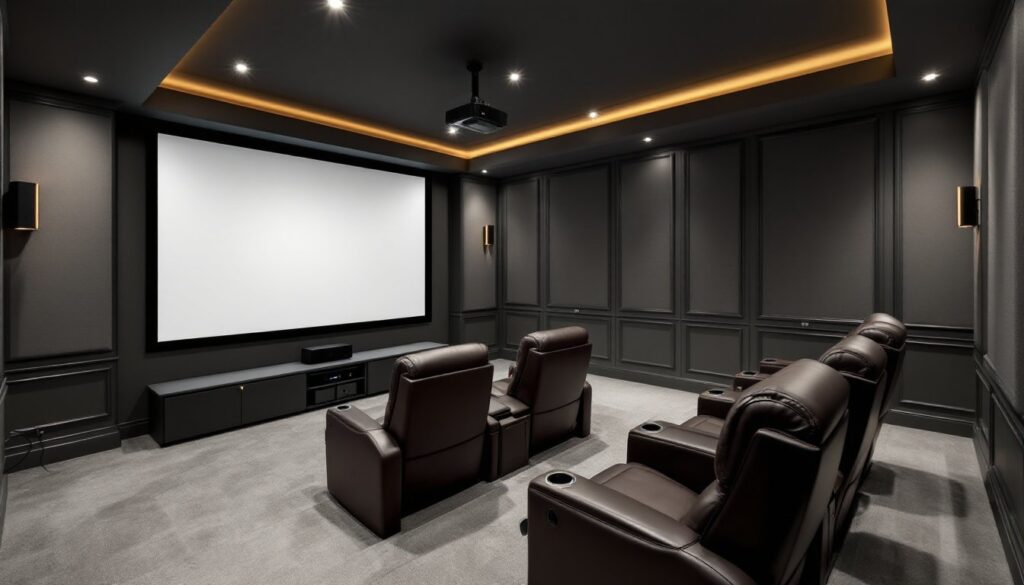
You’ll sit in that chair for two hours at a time. Cheap, uncomfortable seating ruins everything else you’ve invested. Theater-style recliners with manual or power adjustment, cup holders, and firm lumbar support cost $800 to $2,000 per seat, a worthwhile investment if you use the room regularly. Standard furniture (couches, sectionals) works too, but add an ottoman or side table for foot support. Measure your sight lines carefully. The bottom of your screen should be roughly at eye level when seated: the top should be no higher than 30 degrees above eye level to avoid neck strain during long movies.
Arrange seating in stadium-style rows if space allows, with the back row elevated 12 to 18 inches higher than the front. This prevents heads blocking screens. Leave 18 inches minimum between rows for legroom and projection throw distances. Use darker fabrics and low-pile carpet to reduce reflections and echo, light-colored or textured fabrics scatter sound, making dialogue muddy.
Design and Layout Best Practices for Home Theaters
Room proportions matter far more than people realize. Avoid square rooms, they trap bass unevenly and create standing waves that muddy low-frequency response. If your space is square, break that symmetry with asymmetric speaker placement or acoustic treatment. Dedicated rooms work best, but a corner of a basement or a separate den can work if you treat acoustics properly.
Start by measuring dimensions and calculating the room’s reverberation time. Hard surfaces (drywall, wood floors, glass) bounce sound everywhere: soft surfaces (carpet, curtains, furniture) absorb it. A well-designed home theater balances both. Install acoustic panels behind and beside the main listening position, treating first-reflection points (where sound bounces off walls before reaching your ears). This doesn’t require expensive custom panels, quality fiberglass panels cost $30 to $75 each and visibly improve clarity.
Plan cable runs and outlet placement before mounting anything. Running speaker wire through walls requires proper conduit and permits in many jurisdictions, check local codes. Budget extra time for wire management: sloppy cable runs look unprofessional and cause interference. Use quality shielded interconnects between components, not cheap bundled cables. Speaker placement should follow manufacturer recommendations, typically 6 to 12 feet apart for surround channels and 8 to 15 feet for mains, depending on your room size.
Lighting control is essential. Install blackout curtains or cellular shades, not just for darkness, but to control light spill across your screen and reduce glare on reflective surfaces. Dimmable overhead lights with theatrical dimmer switches provide flexibility for pre-show socializing. Consider motion-sensor accent lighting along the floor for safe navigation during movies.
DIY Tips for Building Your Own Quality System
Start small and upgrade methodically. Buy a quality AV receiver first, it’s the core component you’ll keep for years. Pair it with two good bookshelf speakers and a subwoofer. Live with this 2.1 setup for a few weeks. Listen critically, measure distances, and dial in your subwoofer’s crossover frequency (usually 80 Hz for bookshelf speakers). This foundation teaches you what good sound actually sounds like.
Add surround speakers only after your front three channels (left, center, right) are working perfectly. Surrounds amplify existing problems: don’t mask weak mains with ambient effects. When you add surrounds, use the same brand and tonal character as your mains, mismatched surrounds pull focus and distract viewers.
Calibration matters enormously. Use a calibrated microphone (available for $100 to $300) to measure your system’s frequency response. Many receivers include calibration mics. Spend an evening running sweeps, adjusting speaker levels, and fine-tuning subwoofer placement. A 2 dB change in subwoofer level is often audible: a 6-inch movement in position can change bass response dramatically. This work is tedious but irreplaceable.
Room treatment doesn’t require professional acoustic design. Start with 12×12-inch, 2-inch-thick fiberglass panels ($40 to $60 each) at first-reflection points, typically one panel per side wall at ear level, and a few behind your listening position. Avoid over-treating: too much absorption kills liveliness. Aim for a reverberation time of 0.3 to 0.5 seconds at mid frequencies.
When mounting a projector, invest in a quality motorized ceiling mount with proper ventilation clearance. Projectors run hot: block ventilation and you’ll shorten the lamp’s life from 5,000 hours to 2,000. For wall-mounted TVs, use a full-motion articulating mount rated for your display’s weight (not estimated weight, actual weight). Cheap mounts fail catastrophically. Wire management behind the TV takes time but makes a huge difference in the final look. Use a cable management raceway or conduit to bundle speaker wires, power cords, and interconnects neatly.
Conclusion
Building a home theater inspired by Gary DelaBonte’s methods doesn’t require a seven-figure budget, it requires patience, honest component choices, and respect for acoustics and room design. Invest time in planning and setup: it pays dividends every time you use the room. Start with quality fundamentals, treat your space thoughtfully, and upgrade deliberately. Product reviews and tested home recommendations can guide purchasing decisions. Your best home theater isn’t the one with the most expensive components: it’s the one that sounds and looks natural, stays calibrated, and delivers the movie experience you actually want to sit in night after night.