Table of Contents
ToggleWasps nesting around your home aren’t just an annoyance, they’re a genuine safety concern, especially if anyone in your household has an allergy or if the nest sits near a frequently-used entryway or patio. When you’re facing an active wasp problem, reaching for Ortho Home Defense seems like a straightforward solution. It’s widely available, aggressively marketed, and promises to tackle the problem. But does it actually work on wasps, and is it the right tool for your situation? This guide walks you through what Ortho Home Defense does, how effective it really is against wasps, and when you should consider alternatives or bring in a professional.
Key Takeaways
- Ortho Home Defense kills wasps on contact but is designed for perimeter prevention rather than active nest elimination.
- Wasp-specific foaming aerosols are significantly more effective for treating existing nests because they penetrate and fill nest cavities, whereas Ortho Home Defense liquid spray cannot.
- Apply Ortho Home Defense early morning or late evening along your home’s foundation, eaves, and entry points for best results, avoiding direct nest treatment.
- For active nests that are large, aggressive, or in hard-to-reach areas like walls or roofs, professional pest control is safer and more reliable than DIY solutions.
- Caulking gaps, sealing vents with hardware cloth, and removing debris create long-term wasp prevention and reduce the need for chemical treatments.
What Is Ortho Home Defense And How Does It Work
Ortho Home Defense is a broad-spectrum insecticide concentrate designed for perimeter home protection and targeted pest control. It comes in a few formulations, the standard concentrate version and spray-ready bottles, and targets a wide range of household pests including ants, roaches, spiders, and others. The active ingredient in most Ortho Home Defense products is bifenthrin, a synthetic pyrethroid insecticide that attacks the nervous system of insects on contact.
When applied correctly, bifenthrin disrupts the insect’s sodium-potassium balance in nerve cells, causing paralysis and death. The product works as both a contact killer and a residual barrier, meaning it kills on touch and continues to be effective on treated surfaces for weeks. For use around the home, Ortho Home Defense is typically diluted with water according to label instructions and applied via sprayer. The residual nature of the product makes it popular for creating a protective perimeter around foundations and entry points.
But, the formulation wasn’t specifically engineered for wasps. It’s a general-purpose perimeter product, which is an important distinction when evaluating its wasp-killing potential.
Effectiveness Against Wasps
Ortho Home Defense does have activity against wasps, but it’s not the most specialized or potent choice for this specific pest. The product will kill wasps on contact if applied directly to the insect or nest, but it’s not formulated with the aerosol spray delivery system that makes wasp-specific killers so effective. Wasps are fast, mobile targets, they don’t sit still while you spray liquid around a perimeter.
The real question is: will it work for your situation? If you’re spraying the perimeter of your home and wasps happen to land on treated surfaces, yes, the bifenthrin will kill them eventually. But if you’re trying to eliminate an active nest, relying on a general-purpose concentrate is like using a hammer when you need a screwdriver. You might get the job done, but you’re working against the tool’s intended design.
Wasp-specific products, especially foaming aerosol formulations, are engineered to penetrate nest openings and kill occupants inside the nest quickly. These use different active ingredients, often synthetic pyrethroids combined with other compounds, and deliver the product in a way that coats the nest interior efficiently. Ortho Home Defense, applied as a liquid spray, won’t penetrate a paper wasp nest or sealed mud dauber burrow the way a foam will.
When Ortho Home Defense Is Most Effective
Ortho Home Defense works best as a preventative barrier treatment rather than an active nest elimination tool. If you spray it along your foundation, eaves, and entry points, places where wasps might crawl or land, the residual protection can deter and kill wasps before they establish nests. This approach makes sense in spring, before wasp season peaks.
It’s also moderately effective if you catch a wasp in the open and spray it directly. Direct contact with the liquid will kill the insect, though you’ll need to aim accurately and get close, which isn’t always practical when the pest can sting. The product offers some value as part of a broader integrated pest management approach, but it shouldn’t be your first choice for an existing wasp problem.
Application Tips For Targeting Wasps
If you decide to use Ortho Home Defense on wasps, follow these guidelines for the best results:
Prepare the area. Clear debris and dead vegetation from around your home’s foundation and eaves. Wasps are less likely to nest on clean, open surfaces. Tighten up cracks in siding, caulk gaps around trim, and seal exterior vents with hardware cloth or screens.
Time your application. Spray early morning or late evening when wasp activity is lowest. Wasps are sluggish in cool temperatures and less likely to be actively flying and defending nests. Avoid applying during rain, which will wash away the product and reduce residual protection.
Follow label dilution and coverage rates exactly. Ortho Home Defense concentrate requires mixing with water at the proper ratio. Weaker-than-recommended solutions won’t provide effective residual protection: stronger mixes won’t improve effectiveness and waste product. Read the label, it specifies coverage area per gallon, typically around 1,000 square feet for foundation spraying.
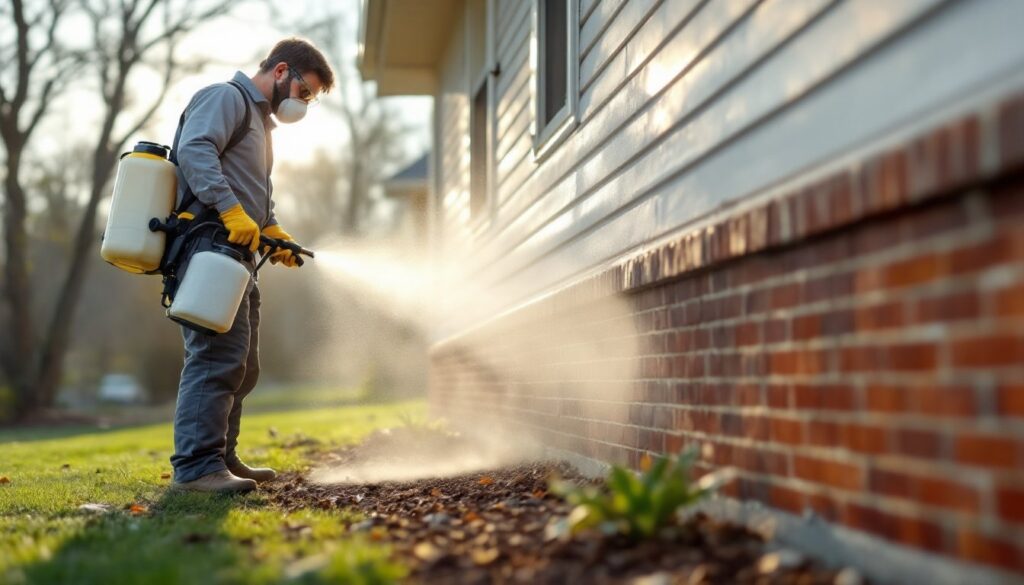
Wear protective equipment. Use nitrile gloves, safety goggles, and a respirator or N95 mask rated for chemical aerosols. Bifenthrin can irritate skin and eyes. If you’re sensitive to chemical odors, wear appropriate respiratory protection and ensure good ventilation.
Apply as a perimeter spray, not a direct nest treatment. Spray 12 to 18 inches high along your foundation, around window frames, door frames, soffit vents, and areas where you’ve observed wasp activity. Don’t try to shoot it into an active nest opening, it won’t work as effectively as a foam aerosol designed for that purpose.
Reapply as directed. Most Ortho Home Defense products offer residual protection for 3 to 4 weeks. Reapply after rain and on the label’s recommended schedule, especially if you’re in a high-activity wasp area.
Safe Alternatives And Complementary Methods
If Ortho Home Defense doesn’t suit your situation, several alternatives exist:
Wasp-specific aerosol foams are far more effective for active nests. Products labeled for wasp, hornet, and yellow jacket control use foaming dispensers that shoot directly into nest entrances. They kill occupants quickly because the foam fills the nest cavity. Ortho Home Defense Hornet and Wasp Killer foaming insecticide is a specialized option from the same brand that works better than the general-purpose concentrate for this specific pest.
Soapy water spray is a low-toxicity option for small nests. Mix a few drops of dish soap in a spray bottle of water and spray directly at the nest early in the morning. The soap disrupts the wasp’s exoskeleton, causing dehydration. It’s slower than commercial insecticides but safer around children and pets if used carefully.
Nest removal and relocation is possible with paper wasp nests if you’re comfortable approaching them. Paper wasps are generally docile unless the nest is directly threatened. At dusk, when wasps are inactive, you can carefully knock a nest into a bucket of soapy water and relocate it far from your home. This works only for exposed paper wasp nests, not for mud daubers, yellow jackets in walls, or ground-nesting wasps.
Caulking and screening prevent wasps from settling in the first place. Seal cracks, gaps, and unused vents. Use 1/4-inch hardware cloth over dryer vents and soffit openings. This is the most lasting preventative measure.
For comprehensive guidance on removal strategies, home improvement resources and professional cleaning and safety guides offer tested approaches.
When To Call A Professional
Be honest about your comfort level and the nest’s location. Wasps can be aggressive, and a sting is no joke, especially for anyone with an allergy. Call a professional if:
- The nest is large (softball-sized or bigger) or in an active area where people gather.
- The nest is in a wall void, attic, or other enclosed space. Yellow jackets and bald-faced hornets often nest in these areas, and DIY removal can result in them scattering into living spaces.
- You have a health condition or family members with wasp allergies that make the risk unacceptable.
- You’ve tried DIY removal once and the wasps returned or became more aggressive.
- The nest is on a roof, high eave, or anywhere you’d need a ladder. Falls are a serious hazard, and wasps are territorial around their nests.
A licensed pest control professional has the right equipment, training, and liability insurance. They’ll assess whether the nest needs removal or can be left alone (many types of wasps are beneficial and only problematic near human activity). They can also identify which species you’re dealing with and recommend the most effective treatment. The cost, typically $150 to $400 for a standard nest removal, is worth the safety assurance and lower risk of repeat infestation.
Conclusion
Ortho Home Defense kills wasps, but it’s better suited to prevention than to eliminating an active nest. For perimeter barrier treatments in spring, it offers solid residual protection and fits a comprehensive pest management plan. If you’re facing an existing nest, wasp-specific foaming aerosols or professional removal are more reliable. Measure the risk, follow label directions precisely, wear appropriate protective gear, and don’t hesitate to call a pro if the nest is large, aggressive, or in a tricky location. Your safety matters more than saving a few dollars on DIY spray.