Table of Contents
ToggleA 5×8 bathroom is a sweet spot for renovation: big enough to fit a full suite of fixtures, but compact enough that every inch counts. Whether you’re updating fixtures, reconfiguring a layout, or starting fresh with a remodel, how you arrange that 40 square feet determines whether your bath feels cramped or functional. This guide walks you through realistic layout strategies, fixture placement, and design tricks that work in real homes, not magazine spreads. You’ll learn what mistakes sink most DIYers and how to plan a 5×8 bathroom that actually serves your daily routine.
Key Takeaways
- A 5×8 bathroom layout requires respecting existing plumbing rough-ins and framing, as relocating fixtures costs $500–$1,500 per fixture and demands professional plumbing expertise.
- Position the toilet, vanity, and shower/tub as a functional work triangle to minimize walking distance and maximize organization within your 40 square feet.
- Light colors, large-format tiles (12×24 inches or larger), mirrors, and vertical emphasis make a 5×8 bathroom feel larger and more open.
- Install a 60–80 CFM exhaust fan venting directly outside and avoid placing vents in corners, as proper ventilation near the shower prevents mold and mildew in compact spaces.
- Use pocket doors or bi-fold doors instead of standard 32-inch swinging doors to reclaim usable floor space and improve circulation in your 5×8 bath.
- Choose appropriately-sized fixtures—a 36-inch vanity with a corner tub beats an oversized soaking tub that consumes an entire wall and eliminates shower or counter space.
Understanding Your 5×8 Bathroom Dimensions and Space Constraints
A 5×8 bathroom gives you 40 square feet of usable floor space, roughly the footprint of a walk-in closet. That’s generous compared to half baths or powder rooms, but tight compared to a master bath. Understanding what “40 square feet” actually means on the ground helps you avoid expensive mistakes.
Start by measuring wall to wall, corner to corner, including any alcoves or angled ceilings. Note door swing: a standard 32-inch entry door swings inward or outward: in a 5×8 space, a door swinging into the room eats up 2 feet of walking space. Mark existing plumbing rough-ins (where supply and drain lines are located). These are costly to relocate, so working with them, not against them, saves thousands.
Most 5×8 bathrooms are either a 5-foot width by 8-foot length or vice versa. If yours is 5 feet wide, fitting a toilet, sink, and shower/tub in a single row requires precise placement. An 8-foot width gives you more flexibility for parallel fixtures (toilet on one wall, vanity on another). Check ceiling height too. A standard 8-foot ceiling works, but if yours slopes, low spots near corners can block taller fixtures or mirrors.
Before sketching anything, take photos and rough measurements. If you’re planning a structural change, moving walls, relocating plumbing vents, or adding a window, that triggers building permits in most jurisdictions. Cosmetic remodels (new tile, fixtures, paint) usually don’t, but verify with your local building department.
Essential Fixtures and Their Ideal Placement
Toilet, Sink, and Shower/Tub Configuration
Three fixtures dominate a 5×8 bath: a toilet (30 inches deep, typically 28 inches wide), a vanity or pedestal sink (24–36 inches wide, 20–22 inches deep), and a shower or tub (32–60 inches wide depending on type). Building codes require a minimum of 21 inches clearance from the toilet centerline to a side wall or fixture, more for grab bars if accessibility matters.
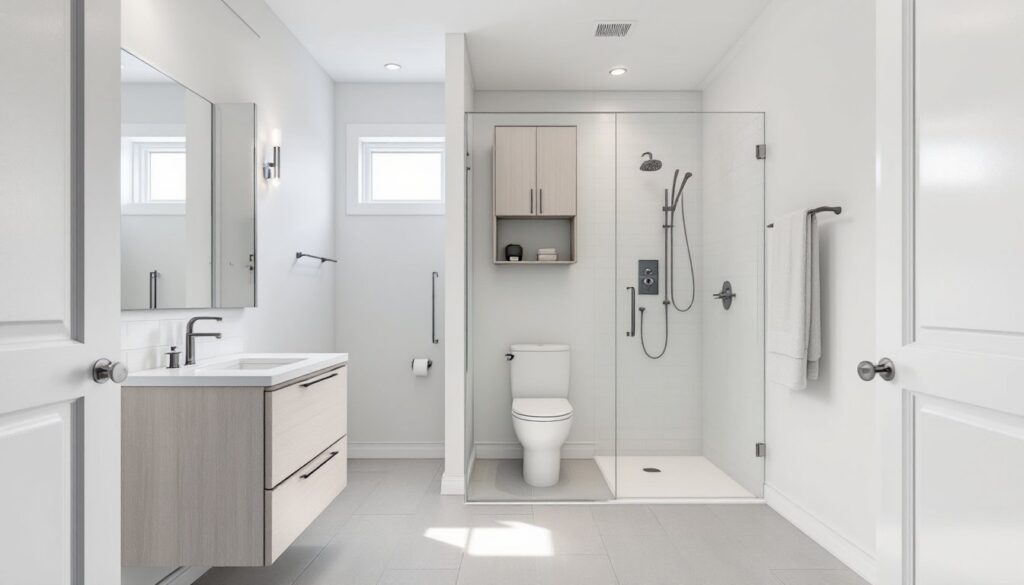
In a 5-foot-wide layout, stack fixtures along the 8-foot walls. Toilet near the door (so it’s not the first thing visitors see), vanity on an adjacent wall, and shower/tub opposite or in a corner. A corner tub saves wall space: a walk-in shower (typically 36×48 inches minimum) eats more floor space but feels more open. If headroom is tight, a shower stall beats a tub.
In an 8-foot-wide layout, you can run fixtures front-to-back. Vanity on one long wall, toilet beside it, and tub/shower on the opposite wall or in a corner. This separates the “wet zone” (toilet and shower) from the “dry zone” (vanity and door), reducing splash damage to cabinetry.
Angled corners and alcoves are gifts in a small bath. A corner toilet frees up wall space: a corner tub (yes, they exist, though pricey) maximizes the footprint. Pedestal sinks and wall-mounted vanities (requiring stud reinforcement) leave floor space visible, making the room feel bigger than a traditional 24-inch vanity cabinet.
Consider rough-in heights: toilet flange sits 12 inches from the finished wall, supply lines for the vanity are typically 20 inches, and shower valve bodies need proper framing depth. If replacing fixtures in their existing locations, you avoid most rough-in surprises. Moving even one fixture by 2 feet can require cutting and patching drywall, relocating supply lines, and extending drain pipes, work that demands a licensed plumber.
Smart Layout Strategies for Maximum Functionality
The golden rule of small-bathroom layout: no “dead zones.” Every square foot should serve a purpose, storage, circulation, or fixtures.
One proven strategy is the “work triangle” approach borrowed from kitchens. Position the toilet, vanity, and shower as three points, ideally within arm’s reach of each other but not cramped. This minimizes walking and keeps the room organized. In a 5-foot-wide bath, the triangle is tight: in an 8-foot-wide bath, you have breathing room.
Storage saves a 5×8 bath from feeling chaotic. Floating shelves above the toilet, a tall linen cabinet in a corner, or recessed medicine cabinets (which recess into the stud cavity, not protruding into the room) all work. A 12-inch-deep recessed cabinet fits between studs spaced 16 inches on center and nearly vanishes into the wall.
Ventilation matters more in small baths. A cramped, humid bathroom breeds mold and mildew. Install a minimum 50 CFM exhaust fan (cubic feet per minute of air moved): for a 5×8 bath, aim for 60–80 CFM. Ductwork should vent directly outside, not into an attic. If yours vents into the attic, that’s a costly but necessary fix during a remodel. Transforming a bathroom into a personal oasis involves thinking beyond aesthetics to everyday functionality and durability.
Plumbing fixture placement should honor existing rough-ins when possible. If your toilet is already centered on one wall and the vanity drain is in the corner, working with those points keeps costs down. But, if the layout feels cramped, professional plumbers can relocate rough-ins, expect to budget $500–$1,500 per fixture moved, depending on complexity and access.
Think about user flow: the toilet shouldn’t block the shower door, and the vanity shouldn’t sit so the mirror faces the tub (steam fogs it constantly). A clear sightline from the mirror to the sink prevents bumping your head when leaning over to wash your face.
Design Tricks to Make Your 5×8 Bath Feel Larger
Small baths are about perception as much as layout. The right design choices make 40 square feet feel spacious.
Light and color: A pale, neutral palette (whites, soft grays, light woods) recedes visually, while dark colors close the walls in. Large-format tiles (12×24 inches or bigger, even 24×48) read as fewer lines and grout joints, making the floor feel less fragmented. Matte finishes feel more sophisticated than high-gloss: glossy subway tile screams “small apartment bathroom.”
Mirrors and glass: A large mirror opposite the vanity bounces light and doubles the visual space. A glass shower door (not opaque curtain) keeps sightlines open through to the far wall. Avoid frosted or patterned glass in small spaces: clear glass maintains the illusion of continuity.
Vertical emphasis: Run tile or paint color up the wall to the ceiling (8 feet, not 7 feet, visually). Tall, narrow fixtures (slim vanities, tall linen cabinets) draw the eye upward, making the ceiling feel higher. A long, horizontal mirrors feel more spacious than vertical ones.
Lighting: Recessed ceiling lights along the centerline and wall-mounted sconces on either side of the mirror eliminate shadows and keep the room bright. Dim bathrooms feel smaller: well-lit ones feel airy. Use 3000K color temperature (warm white) for a welcoming feel, not harsh daylight-colored bulbs.
Fixture finishes: Brushed nickel and chrome blend into backgrounds, while oil-rubbed bronze and brass command attention. In a small space, blend fixtures: in a spacious bath, statement finishes work. Design inspiration from home design platforms shows how small-space thinking, openness, light, strategic color, transforms even the tightest 5×8 footprints.
Common Layout Mistakes to Avoid
Most 5×8 remodels fail not because of poor design but because of overlooked logistics. Here are the biggest stumbles.
Over-sizing fixtures: A 60-inch soaking tub sounds luxurious but consumes an entire wall in a 5×8 space, leaving no room for a vanity or shower. A 32-inch pedestal sink is charming but offers no counter space. Balance desire with reality: a 36-inch vanity with a corner tub beats a 48-inch vanity that shuts out the room.
Ignoring ventilation during layout: Placing the exhaust vent in a corner looks neat but shortens ductwork and reduces airflow efficiency. Vents work best near the moisture source, the shower or tub. If your layout puts the vent far from the shower, moisture lingers.
Forgetting about door clearance: A 32-inch door is standard, but it swings into the 5×8 space, blocking movement. Consider a pocket door (which slides into the wall cavity) or a bi-fold door (folds like an accordion) to reclaim floor space. Pocket doors cost more upfront but save the usable floor area.
Cramming too many fixtures: Five tiers of shelving above the toilet, a large vanity cabinet, a linen closet, and a towel bar create clutter. Pick storage anchor, one tall cabinet or one generous shelf, rather than scattering small solutions everywhere.
Neglecting accessibility early: Grab bars aren’t just for aging-in-place: they prevent falls. If you’re young and agile now, plan for safety anyway. Reinforced backing behind tile in the shower costs nothing during a remodel but requires cutting into walls afterward. A toilet seat height of 17–19 inches suits most bodies.
Wrong surface materials: Porous tile absorbs moisture and stains in a humid 5×8 bath. Porcelain is durable and low-maintenance: natural stone (slate, marble) requires sealing. Anti-slip flooring near the tub prevents accidents. Cost guides on home improvement planning help you budget materials realistically across regions and product grades.
Conclusion
Laying out a 5×8 bathroom successfully balances three demands: functional fixture placement, smart use of limited square footage, and design clarity that makes the space feel open. Start by respecting existing plumbing and framing: relocating rough-ins costs money and time. Position your toilet, vanity, and shower/tub thoughtfully, then layer in storage and lighting to support daily use. Light colors, mirrors, and vertical emphasis are your friends in small spaces. Avoid oversized fixtures, forgotten ventilation, and cluttered storage, and you’ll end up with a 5×8 bath that works harder than its footprint suggests. Measure twice, plan before buying, and don’t hesitate to consult a plumber or contractor if structural changes are on the table, that consultation costs $100–$200 and prevents thousands in rework.